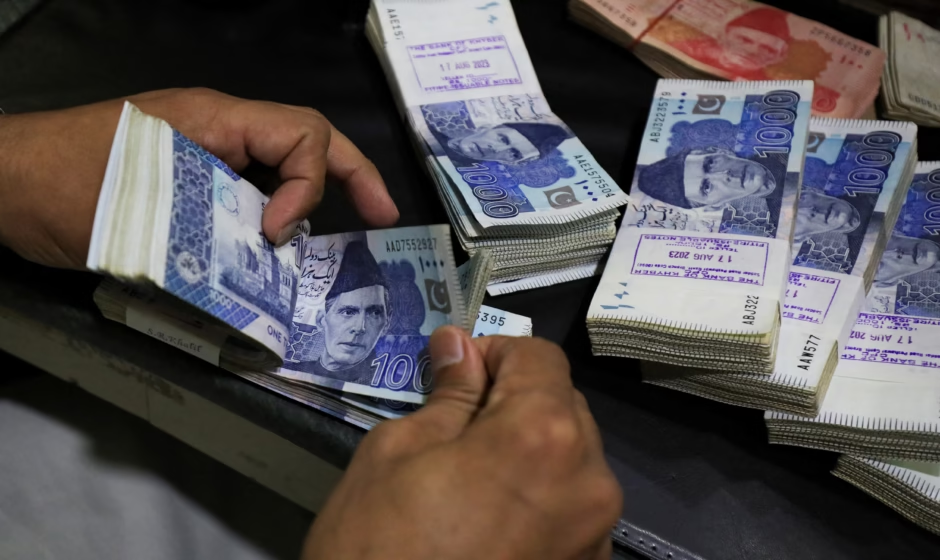

A startling scandal has come to light: billions of Pakistani rupees are allegedly being withdrawn from the Federal Consolidated Fund without the approval or knowledge of the federal government. This revelation, breaking on 16 September 2025, raises serious constitutional, legal, and governance issues.
What is the Consolidated Fund & What Does the Constitution Say?
The Federal Consolidated Fund is Pakistan’s main treasury account where all revenues—taxes, fees, and other national earnings—are deposited. Withdrawals from this fund must follow strict constitutional provisions. Under Article 78 of the Constitution, no money may be drawn from the national treasury without the clear approval of the National Assembly.
What Has Happened?
According to the reports:
- Certain parties have allegedly exploited circumstances like natural disasters or traffic accidents. They file compensation cases on behalf of affected civilians, but these cases are said to be manipulated or exaggerated.
- Courts have issued direct orders for compensation payments, which are then forwarded to the State Bank of Pakistan (SBP). The SBP is accused of executing these orders without verifying whether the withdrawals are lawful or constitutionally valid.
- The province of Sindh has especially been flagged, with dozens of suspicious compensation orders leading to funds being taken from the consolidated fund without federal oversight.
Why This Violates the Law
The scheme described infringes multiple legal and constitutional norms:
- Article 78 violation – since withdrawals from the national treasury without Assembly approval are forbidden.
- Judicial overreach – Courts are ordering payments directly, possibly without proper due process or checks.
- Accountability & oversight failure – SBP and other institutions apparently not verifying the legality of orders.
Implications: What This Means for Pakistan
These allegations are not just about money being misused; they could have far-reaching consequences:
- Financial risk and misuse of taxpayer money: If compensation orders are falsely created or managed, public funds are diverted away from priorities like health, education, infrastructure.
- Erosion of trust in institutions: When courts, the SBP, or other bodies act outside their bounds, public and investor confidence suffers.
- Legal and constitutional crisis: Widespread violations might trigger legal challenges, audits, or even legislative reforms to guard against similar misuse.
- Administrative burden: Investigations, recovery of funds, disciplinary or punitive action against those involved become necessary, draining both time and resources.
What Needs to Be Done: Steps Forward
To address these issues, certain actions seem essential:
| Action Item | Purpose |
|---|---|
| Investigate the scheme thoroughly | Identify all cases of misuse; assess who initiated the orders, and whether due process was followed. |
| Audit role of courts and SBP | Determine if the judiciary and SBP followed legal checks, and if not, restore appropriate oversight. |
| Strengthen procedural safeguards | Introduce stricter requirements for verification, federal approval for withdrawals, even for judicial compensation. |
| Recover misused funds | Where illegal removals are confirmed, reclaim amounts via legal or administrative channels. |
| Ensure transparency | Public disclosure of such cases, audits, outcomes; to uphold public trust. |
Challenges Ahead
Of course, implementing these solutions won’t be simple.
- Political pushback may come from those who benefit from lax oversight.
- Legal challenges: some orders may already be in courts, complicating reversal.
- Administrative overlap: responsibility may lie with multiple institutions, so clarifying mandates is necessary.
- Possible delays and lack of capacity in audit/oversight bodies.
Conclusion
The report that large sums have been withdrawn from Pakistan’s Federal Consolidated Fund without government knowledge is deeply alarming. It points to constitutional violations, institutional failures, and mismanagement of public funds. If true, this issue demands firm and transparent action—legal, administrative, and political—to recover misused funds, restore oversight, and assure citizens that public money is being handled lawfully.
Frequently Asked Questions (FAQs)
Q1. What exactly is Article 78 of Pakistan’s Constitution?
A1. Article 78 stipulates that no money may be drawn from the national treasury except via appropriation by the National Assembly. This means the Assembly must approve expenditures from the Federal Consolidated Fund before money is released.
Q2. Who can order compensation payments via courts?
A2. Courts can issue orders for compensation if legitimate cases are brought before them. However, such orders must still respect constitutional provisions, including that the government or relevant authority is properly involved, and funds are released lawfully.
Q3. What is the role of the State Bank of Pakistan in this issue?
A3. The SBP is functioning as the executor of payments ordered by courts. The controversy is that the SBP may be executing orders without verifying their legality or checking if they had appropriate government/federal approval.
Q4. How widespread are the allegations? Is this limited to one area?
A4. While Sindh is specifically highlighted as a region with many suspicious cases, sources suggest the issue may not be isolated—meaning similar incidents could be happening elsewhere.
Q5. What legal or institutional mechanisms exist to stop such misuse?
A5. Mechanisms include audit institutions, judicial review, appropriation oversight by the Assembly, and regulations requiring verification of orders before executing payments. Strengthening these is essential.
Q6. What should citizens expect next?
A6. There may be investigations by oversight bodies, court challenges, audit reports made public, demands in the Assembly for accountability, and possibly recovery of funds.