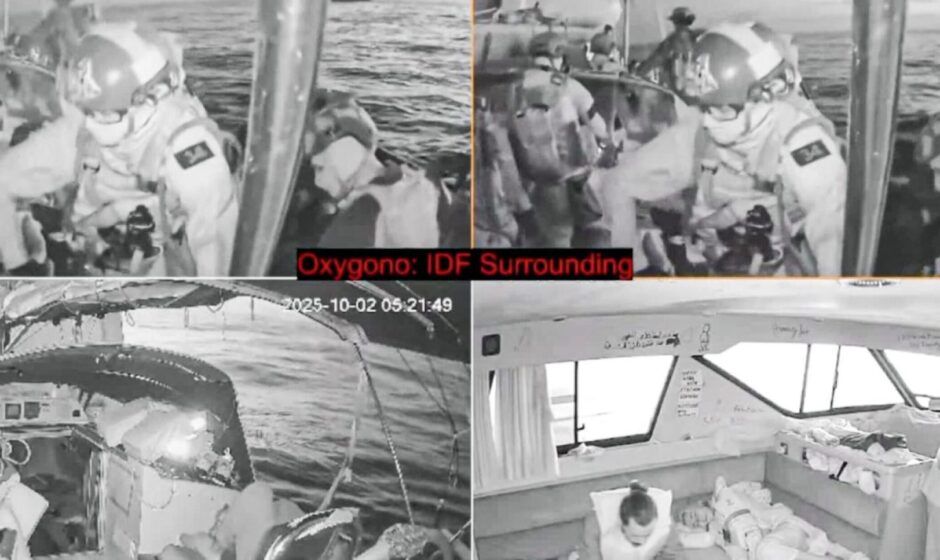

In early October 2025, Israeli naval forces intercepted a humanitarian flotilla known as the Global Sumud Flotilla, which aimed to break Israel’s naval blockade of the Gaza Strip. Over 40 vessels carrying activists, politicians, and aid supplies were halted, and hundreds were detained. Among them was former Pakistani senator Mushtaq Ahmad Khan, who had joined the mission to lend political weight and international solidarity. In this blog post, we break down exactly how the interception unfolded, where the detainees are being held, the conditions they face, and what Israel’s leadership has said since the operation.
How Israel Intercepted the Flotilla
Flotilla Mission & Route
- The Global Sumud Flotilla consisted of roughly 42 vessels carrying around 450–500 activists from dozens of countries.
- Their declared aim was symbolic humanitarian relief and to challenge Israel’s naval blockade of Gaza.
Interception Tactics
- Israeli naval forces boarded and diverted many of the ships in international waters before they reached Gaza’s coastline.
- Some vessels tried to proceed, but ultimately all were intercepted.
- The flotilla boats were escorted to Israeli ports—primarily Ashdod—and the passengers handed over to Israeli authorities.
- The operation lasted many hours, with Israel reportedly first issuing warnings to turn back before boarding.
Rationale & Israeli Position
- Israel justified the interception as necessary to enforce its naval blockade and prevent unauthorized access to the Gaza Strip.
- The operation has drawn widespread international criticism, with many accusing Israel of violating international law and the rights of humanitarian actors.
Where Are the Prisoners Being Held?
Initial Processing & Deportation Plans
- After being intercepted and brought to port, many detainees are being processed for deportation rather than criminal prosecution.
- Israeli police have indicated that over 250 detainees had already been processed ahead of deportation.
Detention Location(s)
- Reports suggest that many of the detainees are being held at Ketziot Prison, a high-security facility in the Negev Desert, which typically does not house immigration or civilian detainees.
- Some detainees were also handed over to Israel Prison Service authorities in ports such as Ashdod.
Prison Conditions
- Ketziot Prison is one of Israel’s largest detention facilities and is known for its harsh desert environment, overcrowding, and strict security protocols.
- Rights groups have previously criticized the prison for poor sanitation, limited access to healthcare, and restrictions on communication with families and legal representatives.
- Activists detained from the flotilla are reportedly being housed in temporary units, with limited contact with the outside world, fueling concerns about humanitarian standards.
Israeli Minister’s Statement After the Capture
Following the operation, Israel’s National Security Minister publicly praised the navy and security forces for their “swift and professional” action, claiming the flotilla posed a potential security risk disguised as humanitarian aid. He emphasized that Israel would not allow any attempt to break the blockade on Gaza, calling the interception a necessary measure to protect national security. The minister also warned that future attempts to breach the blockade would be “met with equal firmness,” reinforcing Israel’s stance that the naval restrictions remain non-negotiable.
What Happened to Pakistani Ex-Senator Mushtaq Ahmad Khan?
Participation & Arrest
- Former Pakistani senator Mushtaq Ahmad Khan was reportedly part of Pakistan’s delegation on the flotilla.
- He was detained by Israeli naval forces during the interception.
Current Status & Uncertainties
- Official Pakistani sources have not publicly confirmed the prison to which he has been transferred.
- Reports indicate that Pakistan is working with international partners to facilitate his release or repatriation.
- Meanwhile, the Pakistani public and political circles have expressed concern and condemnation of what they view as a violation of humanitarian and diplomatic norms.
Conclusion
Israel’s interception of the Global Sumud Flotilla in October 2025 has ignited global debate over the legality of detaining humanitarian actors in international waters. The operation saw over 40 ships intercepted and hundreds of participants detained, many of whom are likely being held at Israel’s Ketziot high-security prison while awaiting deportation. Prison conditions remain a major concern, and the strong remarks from Israeli officials suggest a hardline stance against any future flotilla missions. Among those detained is Pakistan’s ex-Senator Mushtaq Ahmad Khan, whose fate remains uncertain amid diplomatic efforts for his release.
FAQs
Q1: Was Israel legally allowed to intercept the flotilla in international waters?
This is contested. Israel claims its blockade is legal under security principles, while critics argue intercepting ships in international waters without due cause violates maritime law.
Q2: Are the detainees being charged with any crimes?
So far, most appear to be detained pending deportation rather than formal prosecution. No widely confirmed criminal charges have been reported.
Q3: Why Ketziot Prison?
Ketziot is a high-security prison in the Negev Desert. It is being used, despite its usual role not including immigration or foreign detainees, likely for its capacity and security.
Q4: Will Mushtaq Ahmad Khan be released soon?
There is no confirmed timeline. Pakistani authorities are reportedly engaging international partners to facilitate his release or repatriation.
Q5: What avenues do detainees have for legal recourse?
Detainees may appeal through Israeli judicial processes or via consular claims from their home countries. International human rights organizations may also intervene or raise pressure.